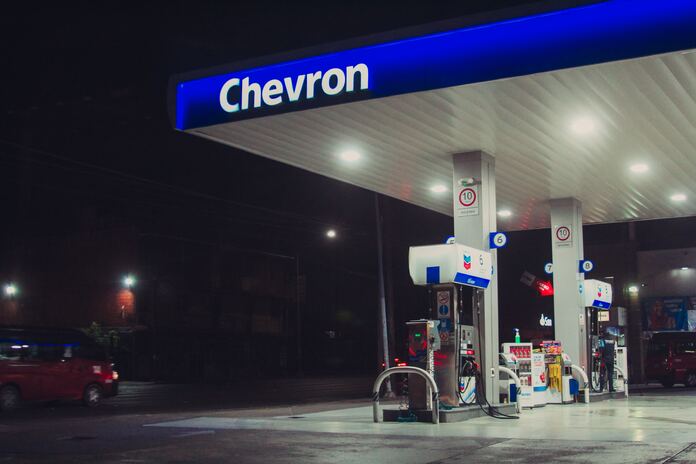
Chevron Corporation (NYSE:CVX) is one of the world’s leading integrated energy companies, operating across upstream and downstream segments. The Houston-based multinational explores, produces, refines, and markets crude oil, natural gas, petrochemicals, and other energy products globally. With a market capitalization of $301.2 billion, Chevron is classified as a mega-cap stock, reflecting its scale, stability, and influence within the energy sector.
Understanding Chevron Stock Performance
CVX stock is currently trading 11.5% below its 52-week high of $168.96, reached on March 26, 2025. Over the past three months, the stock has declined roughly 5%, underperforming the broader S&P 500 Index ($SPX), which gained 5.1% in the same period. On a year-to-date (YTD) basis, CVX has risen 3.2%, though it has fallen 8% over the past 52 weeks. In contrast, the S&P 500 has gained 15.8% YTD and 13.6% over the past year.
Technical analysis shows CVX has been trading below its 50-day moving average since late September 2025, reflecting short-term pressure. However, the stock has largely remained above its 200-day moving average since early July, signaling longer-term resilience despite occasional dips.
Factors Driving Underperformance
Chevron’s lagging performance can be attributed to several factors. Global oil prices have weakened throughout 2025, directly affecting revenue and cash flow for CVX. As a company highly sensitive to commodity price fluctuations, Chevron is exposed to market volatility that influences investor sentiment.
Operational challenges have also contributed. In May 2025, Chevron lost high-margin production in Venezuela when its U.S. license expired, temporarily halting production and exports. The Trump administration later issued a restricted license, allowing Chevron to resume operations, but the temporary disruption pressured cash flow and created uncertainty for investors.
Legal and regulatory matters, combined with market dynamics, have further complicated the performance outlook for CVX stock. Despite these headwinds, Chevron continues to benefit from its diversified global operations and status as a major energy player.
Comparing Chevron With Competitors
Chevron’s main competitor, Exxon Mobil Corporation (NYSE:XOM), provides a useful benchmark. XOM has gained 6.7% YTD, outperforming Chevron, though it declined 2.7% over the past 52 weeks. This comparison highlights how company-specific factors, beyond general market movements, can influence stock performance within the energy sector.
In terms of valuation, CVX trades at a modest premium relative to its peers and historical averages. While its share price has underperformed recently, analysts remain generally positive.
Analyst Ratings and Price Targets
Chevron (NYSE:CVX) has a consensus rating of “Moderate Buy” from 26 analysts covering the stock. The mean price target of $169.43 suggests a potential 13.3% upside from current levels, signaling confidence in Chevron’s ability to navigate near-term challenges.
Investors should consider that Chevron’s performance is closely tied to energy markets, geopolitical developments, and operational factors. While short-term volatility may persist, the long-term outlook for a mega-cap integrated energy company remains supported by stable global demand and diversified operations.
Key Takeaways for Investors
-
CVX stock has underperformed the S&P 500 due to weaker oil prices and operational disruptions.
-
The company maintains a strong mega-cap status with diversified global operations.
-
Technical indicators show short-term weakness but long-term resilience above the 200-day moving average.
-
Analyst sentiment remains positive, with potential upside indicated by mean price targets.
-
Investors should monitor oil price trends, regulatory developments, and global market conditions when evaluating CVX.
For those considering Chevron stock (NYSE:CVX), the balance between current underperformance and long-term stability is critical. While short-term volatility may challenge investors, Chevron’s scale, diversified operations, and analyst-backed upside provide potential opportunities for patient, risk-tolerant shareholders.
For those considering Chevron stock (NYSE:CVX), the balance between current underperformance and long-term stability is critical. While short-term volatility may challenge investors, Chevron’s scale, diversified operations, and analyst-backed upside provide potential opportunities for patient, risk-tolerant shareholders. Investors should also track global energy policies, supply-demand trends, and competitor strategies, as these factors can significantly influence CVX stock performance and present both risks and opportunities for long-term growth.
Featured Image: Unsplash
 Author Stephanie Bédard-Châteauneuf