Tesla (NASDAQ:TSLA) is set to report its fourth-quarter earnings, and analysts suggest this could be one of the most eventful releases in recent memory. Morgan Stanley warns that the results could produce an unusually wide range of outcomes, with the stock reaction hinging on updates in robotaxis, Full Self-Driving (FSD), and Tesla’s emerging AI hardware programs.
In this Tesla earnings preview, we examine the five key factors that could move TSLA stock and why investors are paying close attention.
Financial Expectations Set a Low Bar
On the financial side, Morgan Stanley’s forecasts sit below consensus for several key metrics. The firm projects 2026 deliveries of 1.6 million units, about 9% below street estimates. Auto gross margins are expected at 14.2%, compared with the 15% anticipated by most analysts.
Morgan Stanley also warns of a potential free cash flow (FCF) burn of $1.5 billion in 2026, contrasting sharply with the consensus of a positive $3.1 billion. The bank cites a “significant step-up in capex” as the primary driver behind the cash outflow. These expectations set the stage for TSLA’s stock reaction to hinge more on operational updates than pure financial results.
1. Robotaxi Rollout Could Be a Near-Term Catalyst
The first major factor in this Tesla earnings preview is the rollout of robotaxis. Tesla’s timing for a public launch “with no safety monitor in Texas” is considered a critical near-term catalyst. Investors will closely watch updates on miles driven in Austin, as this will serve as an indicator of Tesla’s progress in deploying autonomous vehicles at scale.
If Tesla provides tangible proof of robotaxis operating safely and efficiently, it could unlock a major growth narrative for TSLA, potentially offsetting weaker financial metrics.
2. Path to Unsupervised Full Self-Driving
Another pivotal area is Tesla’s Full Self-Driving (FSD) program. Morgan Stanley notes that Tesla’s cumulative FSD miles have surged to approximately 7.4 billion. The company aims to introduce an enhanced “eyes-off” experience in phases throughout 2026.
This development is crucial for the Tesla earnings preview because unsupervised FSD represents a massive long-term revenue opportunity. Investors will be listening for details on software rollout schedules, regulatory approvals, and real-world performance. Any hint that Tesla is closer to fully autonomous operations could boost TSLA stock.
3. AI5 Chip Progress and Future Hardware
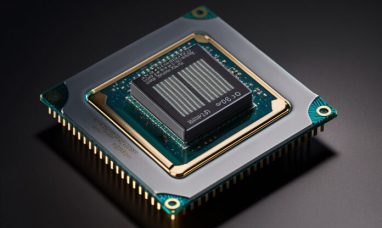
Tesla’s AI hardware initiatives are also a major focus. Investors are looking for updates on the AI5 chip, as well as forward-looking plans for AI6+ and the Dojo supercomputer.
These programs are part of Tesla’s broader strategy to own the AI stack from chip to software. Progress in AI5 and beyond could not only enhance FSD performance but also reinforce Tesla’s position as a technology leader, providing a narrative that supports long-term TSLA growth.
4. Optimus Gen 3 Unveil
Tesla’s Optimus humanoid robot project has gained attention as a growth story beyond automobiles. The company is targeting February or March 2026 for the Gen 3 reveal.
Morgan Stanley describes Optimus as “an increasingly important part of the Tesla story,” highlighting that investors will want to see advancements in robotics and automation. While Optimus is not expected to materially impact short-term revenue, progress in this area could enhance market perception and contribute to TSLA’s valuation multiple.
5. The ‘Muskonomy’ and Strategic Convergence
Finally, Morgan Stanley points to the convergence of Elon Musk’s various ventures — including Tesla, SpaceX, and other AI-related projects — as another factor to monitor. Termed the “Muskonomy,” this convergence reflects synergies across technology and operational strategies that could influence investor sentiment.
Any updates highlighting cross-company collaboration, cost efficiencies, or technology sharing could provide a bullish narrative, even if Tesla’s core financial metrics underperform.
Conclusion: Key Takeaways from This Tesla Earnings Preview
This Tesla earnings preview suggests that TSLA stock may respond more to operational updates than to earnings numbers alone. Robotaxi deployment, FSD progress, AI chip development, Optimus advancements, and Elon Musk’s broader strategic moves all have the potential to drive stock volatility.
Investors should prepare for a wide range of outcomes. While financials may underwhelm, meaningful updates on technology, autonomy, and AI hardware could offset concerns and set the stage for renewed optimism in Tesla.
By focusing on these five catalysts, market participants can better assess whether Tesla’s next chapter justifies a rally or reinforces existing caution.
Featured Image: Freepik
 Author Stephanie Bédard-Châteauneuf