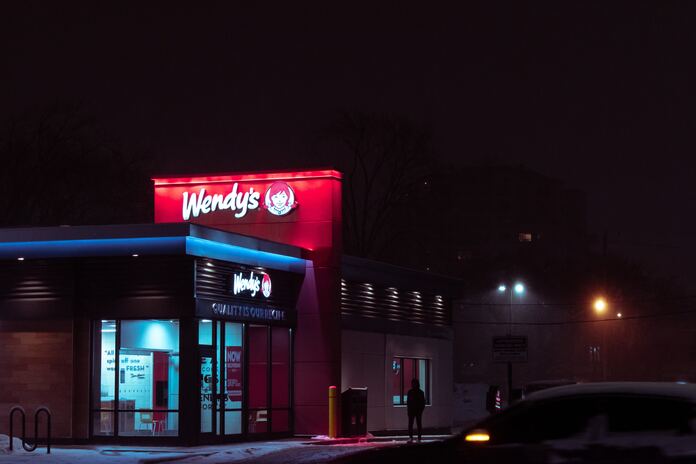
Wendy’s (NASDAQ:WEN) is taking bold steps to address declining sales by closing several hundred underperforming U.S. restaurants and emphasizing value for customers. The move comes after weaker-than-expected fourth-quarter results, reflecting a challenging retail and fast-food environment.
Weak Q4 Prompts Action
For the October–December period, Wendy’s global same-store sales fell 10%, missing the 8.5% decline analysts had expected, according to FactSet. U.S. locations performed even worse, highlighting the need for a significant turnaround. Wendy’s interim CEO and CFO Ken Cook noted that prior promotions focused too heavily on limited-time offers rather than sustainable, everyday value, a strategy they are now rebalancing.
Restaurant Closures and Restructuring
Wendy’s ended 2025 with 5,969 U.S. restaurants after closing 28 locations in Q4. The company plans to shutter an additional 298 to 358 stores—about 5% to 6% of U.S. locations—by mid-2026. These closures follow 240 U.S. location shutdowns in 2024, many of which were considered outdated. The strategy mirrors that of competitors like McDonald’s and Taco Bell, who have also modernized and optimized their restaurant footprints.
Emphasizing Value
To attract cost-conscious customers amid persistent inflation, Wendy’s introduced the permanent “Biggie Deals” menu in January 2026. The menu features three price tiers: $4 Biggie Bites, $6 Biggie Bags, and $8 Biggie Bundles. Cook explained that the new focus on everyday value will replace the prior reliance on short-term promotions. Wendy’s is also preparing to launch new products, including a chicken sandwich, to further drive traffic and sales.
Financial Performance
Wendy’s revenue fell 5.5% in Q4 to $543 million, slightly above the $537 million forecast by analysts. Despite the drop in same-store sales, the company expressed confidence that its U.S. turnaround initiatives and international expansion would stabilize performance. For 2026, Wendy’s expects global systemwide sales, which include both company-owned and franchised locations, to remain flat after a 3.5% decline in 2025.
Investor Reaction
The market responded positively to Wendy’s plan, with shares rising nearly 5% in mid-day trading following the announcement. Investors appear encouraged that the chain is addressing underperformance through targeted closures, menu value adjustments, and new product launches.
Outlook
Wendy’s US restaurant closures and focus on value reflect a broader strategy to modernize operations and attract customers who are seeking affordability without compromising quality. By closing underperforming locations, streamlining operations, and introducing the Biggie Deals menu, Wendy’s aims to stop the sales decline and set the stage for sustainable growth.
Analysts and investors will be watching carefully how well these changes resonate with consumers and impact same-store sales in the coming quarters. The combination of fewer, better-performing restaurants and a renewed value strategy positions Wendy’s to remain competitive in the fast-food sector while addressing previous missteps.
Strategic Focus on Long-Term Growth
Beyond immediate sales concerns, Wendy’s is using the closures and value menu strategy as part of a longer-term plan to strengthen its brand and operational efficiency. By trimming underperforming locations, the company can concentrate resources on higher-traffic restaurants and remodel those that remain, offering a more consistent and modern customer experience. This approach not only helps reduce operating costs but also frees up capital to invest in technology, digital ordering, and delivery partnerships—key drivers of growth in today’s fast-food market.
The renewed emphasis on value positions Wendy’s to capture budget-conscious consumers while maintaining profitability. With inflationary pressures still affecting households, everyday deals like Biggie Deals are likely to draw repeat traffic and build loyalty. Analysts note that combining store optimization, product innovation, and menu value could help Wendy’s stabilize U.S. sales and support gradual margin improvement, even as the chain navigates competitive pressures from rivals and changing consumer habits.
Featured Image: Unsplash
 Author Stephanie Bédard-Châteauneuf